

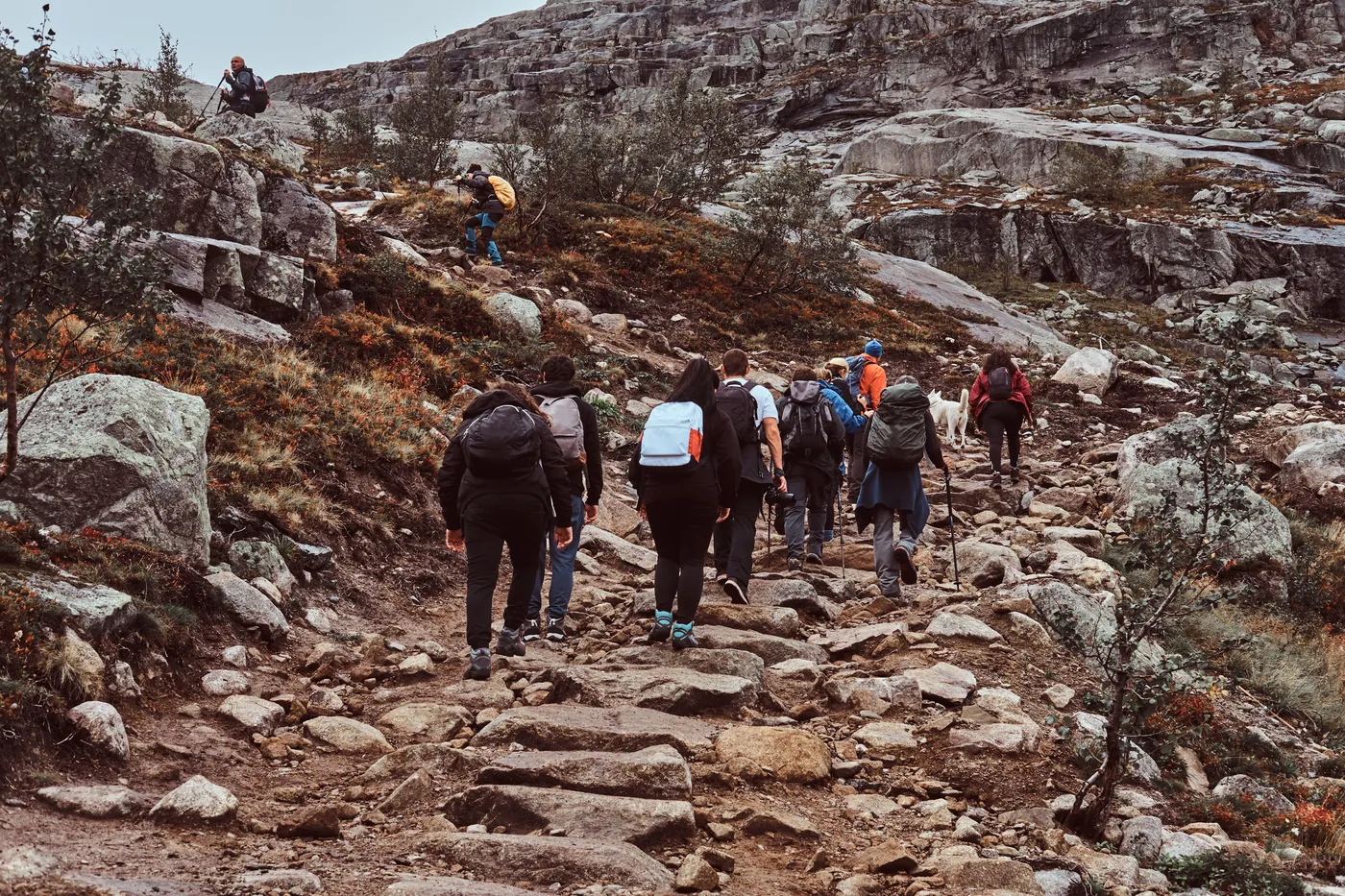
Short answer: New Zealand's Land Safety Code has five steps for anyone walking or tramping: choose the right trip, understand the weather, pack warm clothes and extra food, share your plans and take ways to get help, and take care of yourself and each other. For a group, that means a walk matched to the slowest walker, a weather call on the day, warm layers in every pack, a trip plan left with someone, and a distress beacon on longer or remote walks.
This guide is for travel agents and tour operators who add walks to a New Zealand programme, and for travellers who plan to walk on their own. The code is published by the Department of Conservation (DOC) and New Zealand's outdoor safety organisations. It applies to a two-hour track as much as to a multi-day tramp, because the weather in the hills can change within the same day.
What are the five steps of the Land Safety Code?
- Choose the right trip for you. Learn about the route and make sure you have the skills for it.
- Understand the weather. It can change fast. Check the forecast and change your plans if needed.
- Pack warm clothes and extra food. Prepare for bad weather and an unexpected night out.
- Share your plans and take ways to get help. Tell a trusted person your trip details, take a distress beacon, and leave a date and time for them to raise the alarm if you have not returned.
- Take care of yourself and each other. Eat, drink and rest, stick with your group and make decisions together.
How do you share a trip plan?
DOC suggests three ways: send the details to a trusted person directly, fill in the Outdoors Intentions form, or use Plan My Walk. Whichever you choose, the plan should say where you are going, who is in the party, and the date and time at which your contact should raise the alarm.
Plan My Walk is a free trip planner from the New Zealand Mountain Safety Council, on the web and as an app. It covers more than 3,000 tracks, huts and campsites, shows track alerts from DOC and local councils, carries MetService forecasts and warnings, builds a gear list, and, with a free account, lets you share your trip plan with your group and an emergency contact.
Do you need a distress beacon?
DOC's advice is that a distress beacon can save your life, because it shows rescuers your approximate location. A personal locator beacon (PLB) works on a satellite network with good coverage across New Zealand. Satellite messengers such as SPOT or inReach use a different network with less coverage and a weaker signal, so they may not work under thick forest, in very remote places or in bad weather.
- Hiring. There are hire outlets throughout New Zealand, including tramping shops and DOC visitor centres such as Aoraki/Mount Cook, Tongariro National Park, Arthur's Pass, Queenstown and Rakiura National Park on Stewart Island.
- Registering. DOC says all PLBs must be registered, which is also required by law. Registration at beacons.org.nz is free, with no ongoing subscription. If you hire a beacon, ask the outlet how it is registered and what trip details they need from you.
- Using it. Raise the aerial and press the button, and the beacon sends a signal by satellite to tell rescuers you need help. DOC's advice is that if you are unsure whether to set it off in an emergency, it is better to activate it and get help.

What should agents plan for?
- Match the walk to the group. Pick the track for the slowest walker, not the fittest, and give us the group's real fitness level when you send the brief.
- Keep a weather alternative. We build a second option into any walking day so the programme still works if the forecast turns, as our weather contingency guide explains.
- Tell clients what to pack. Warm layers, a waterproof jacket, food and water belong in every daypack, even on a sunny morning.
- Guided walks. On a guided walk the operator plans the route and carries the communication gear. Ask the operator what they carry; our adventure activity safety guide lists the questions.
- Independent walkers. Clients walking on their own should leave a trip plan and, for longer or remote walks, hire a beacon.
How Explera DMC New Zealand can help
We plan walking days for groups as the Aoraki Mount Cook DMC and as the Tongariro DMC for travel agents, tour operators and travellers alike; our Great Walks and guided walking service covers multi-day walks. Read our guides to the Hooker Valley Track and to the Tongariro Alpine Crossing before you choose a walk.
FAQ
What is the Land Safety Code? Five steps for safe walking and tramping in New Zealand: choose the right trip, understand the weather, pack warm clothes and extra food, share your plans and take ways to get help, and take care of yourself and each other.
How do I leave a trip plan in New Zealand? Send your trip details to a trusted person, use the Outdoors Intentions form, or use Plan My Walk. Include a date and time for them to raise the alarm.
Where can visitors hire a personal locator beacon? At hire outlets throughout New Zealand, including tramping shops and several DOC visitor centres, such as Aoraki/Mount Cook, Tongariro National Park and Queenstown.
Is Plan My Walk free? Yes. It is a free planner from the New Zealand Mountain Safety Council, with track alerts, MetService forecasts, gear lists and trip sharing.
Sources
- Land Safety Code, Department of Conservation, checked 7 November 2026
- Take a distress beacon, Department of Conservation, checked 7 November 2026
- Plan My Walk, New Zealand Mountain Safety Council, checked 7 November 2026
Talk to the trade desk
Explera DMC New Zealand trade desk — b2b@explera.co.nz, WhatsApp +66 93 656 8090, B2B portal b2b.expleradmc.com.


