

New Zealand nature and wildlife, for the trade.
Sanctuaries, seabirds, penguins and whales, with the viewing rules.
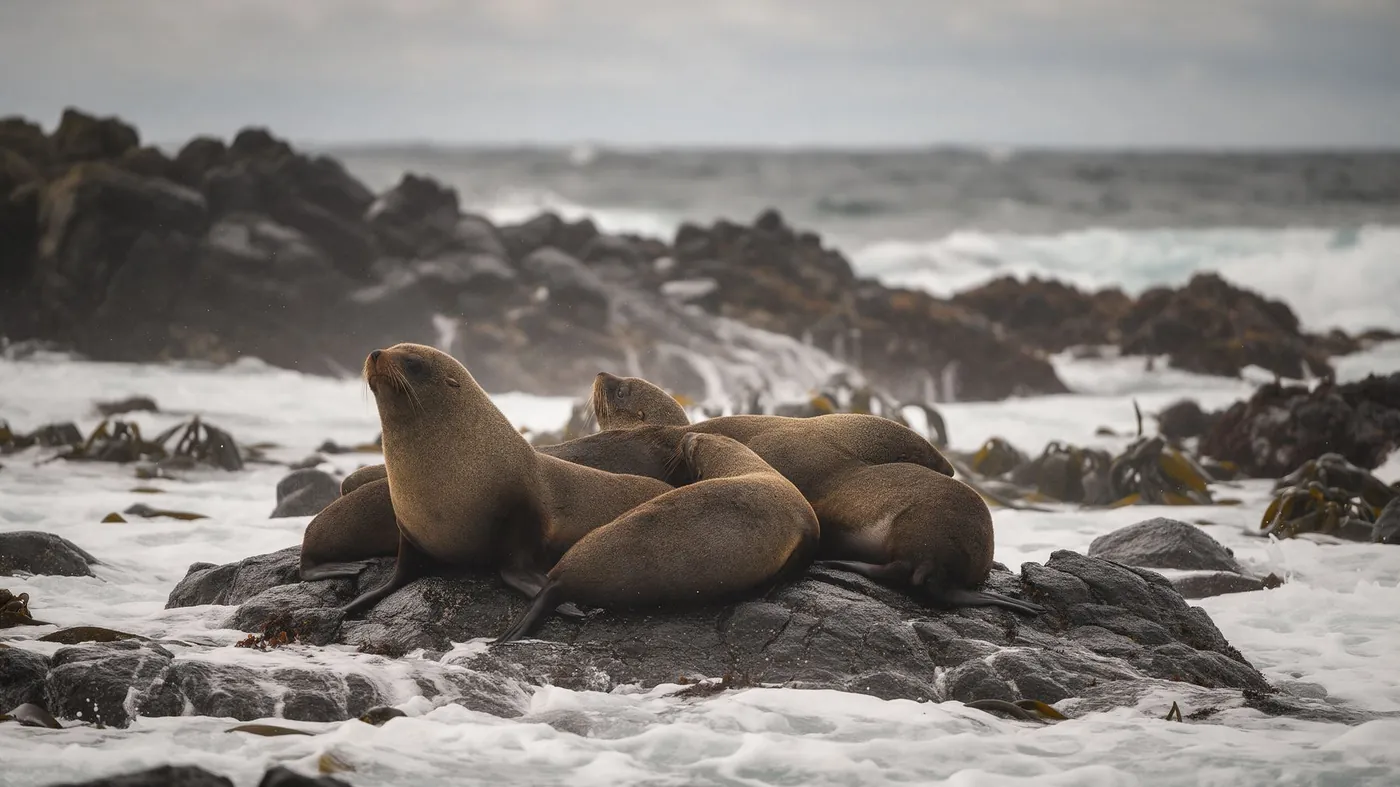
Where can groups see New Zealand wildlife?
Sanctuaries such as Zealandia and Tiritiri Matangi suit birdlife, Otago has albatross and penguins, Kaikōura has whales and Akaroa has Hector’s dolphins. Sightings are never guaranteed, so sell the place and the operator, not the animal.
Last updated: 9 October 2026
Why this theme sells.
New Zealand’s birds evolved without land mammals, and introduced predators are the main threat to them. That is why fenced sanctuaries, predator-free islands and permitted operators are the usual way to see native wildlife.
Genetic research recognises five kiwi species, and DOC’s Kiwi Recovery Plan 2018 to 2028 aims to raise numbers by at least 2% a year towards 100,000 by 2030. Programmes that explain this give clients more than a sighting.
Places and experiences to know.
Zealandia, Wellington
A 225-hectare eco-sanctuary ringed by an 8.6 km predator-exclusion fence, often described as the first fully fenced urban sanctuary. It is owned by the Karori Sanctuary Trust, has walking tracks, and runs guided day and night tours.
Destination guideTiritiri Matangi, Hauraki Gulf
A DOC open sanctuary about 4 km off the Whangaparāoa Peninsula, managed with the volunteer group Supporters of Tiritiri Matangi. Visitors can see takahē, kōkako, tīeke (saddleback) and hihi. DOC lists the public ferry from Auckland as running Wednesday to Sunday, booking out in summer, and dogs are not allowed.
Destination guideStewart Island / Rakiura and Ulva Island
DOC lists Glory Cove on Stewart Island as a kiwi protection area where kiwi can be seen in the wild. Ulva Island, a predator-free bird sanctuary, is reached by water taxi from Oban.
Destination guideTakahē and kākāpō
Takahē were thought extinct until Geoffrey Orbell rediscovered them in Fiordland’s Murchison Mountains on 20 November 1948. DOC counted 325 kākāpō in September 2026 after a record breeding season; they live on three predator-free breeding sites, and we found no public visiting programme, so do not sell a kākāpō sighting.
Destination guideOtago Peninsula and Ōamaru
Taiaroa Head holds the only mainland albatross colony in the Southern Hemisphere, viewed from an observatory on a guided tour, with the best viewing from December to March. Hoiho (yellow-eyed penguins) are nationally endangered, and kororā (little blue penguins) come ashore at dusk at Ōamaru.
Destination guideKaikōura whales
Sperm whales are seen all year because the deep Kaikōura Canyon runs close to shore. Humpbacks pass in winter, though sources differ on the months, from June to August. Commercial viewing from a vessel needs a DOC marine mammal permit.
Destination guideAkaroa and Hector’s dolphins
On 11 September 2026 DOC announced a ten-year moratorium on new marine mammal permits around Banks Peninsula, widening the area from Akaroa Harbour to all waters between the Avon-Heathcote Estuary mouth and Birdlings Flat. Existing permits held by six operators are unaffected, and Hector’s dolphins are classed Threatened, Nationally Vulnerable.
Destination guideSeals at Cape Foulwind
The walk from the Tauranga Bay car park to a fur seal viewpoint is about 500 m and 15 minutes one way, and DOC lists it as accessible for assisted wheelchairs and buggies. Seals are present all year and the colony is busiest in the breeding season, roughly November to February.
Destination guideKea at Arthur’s Pass
Kea are the world’s only alpine parrot and are often seen at Arthur’s Pass. DOC asks visitors not to feed them: feeding harms their health and puts them at risk from vehicles.
Destination guideWhen it works.
Wildlife is a year-round product with seasonal peaks. Royal albatross chicks are fed from December to March, sperm whales stay at Kaikōura all year, humpbacks pass in winter, and the seals at Cape Foulwind are busiest from November to February. Confirm seasonal timetables with each operator at quotation.
See the full seasonal calendar for lead times and school holidays.
What to check first.
- Sightings are never guaranteed. Sell the place, the guide and the experience, and check the cancellation terms for weather-dependent boats.
- Commercial whale, dolphin and seal viewing from a vessel needs a DOC marine mammal permit, and swimming with whales is prohibited. Ask each operator for its permit.
- Keep wildlife wild: do not feed animals such as kea, keep to tracks, and follow sanctuary biosecurity checks. Brief clients before departure.
Related services and programmes.
Services: Cruises & water experiences · Guides & driver-guides · Group tours & GIT.
See itineraries and fixed departures for ready-made programmes.
What agents ask about this theme.
Can groups see wild kiwi?
Sightings are never guaranteed. DOC lists Glory Cove on Stewart Island as a kiwi protection area where kiwi can be seen in the wild, so ask local operators what they offer.
Do whale and dolphin operators need a permit?
Yes. Commercial viewing from a vessel needs a DOC marine mammal permit, and swimming with whales is prohibited. Ask each operator for its permit.
What changed for Akaroa dolphin tourism in 2026?
On 11 September 2026 DOC announced a ten-year moratorium on new marine mammal permits around Banks Peninsula. Existing permits held by six operators are unaffected.
More ways to explore New Zealand.
Explera DMC New Zealand is the B2B New Zealand DMC for nature and wildlife programmes. We contract the accommodation, transfers, licensed guides and experiences at net rates, so you sell nature and wildlife programmes with one accountable ground partner and your own branding. Send the brief to our New Zealand DMC desk for a net programme quotation.
Start quoting New Zealand at net rates this week.
Register on the Explera trade platform for net rates, white-label documents and one accountable desk from first quote to final transfer. Registration is free and approval is fast.