

Short answer: In summer, rare shorebirds nest on open sand on many beaches in Northland, Auckland and the Coromandel. The tara iti (New Zealand fairy tern) is the rarest breeding bird in New Zealand, and the northern New Zealand dotterel nests on the same kind of beach. The Department of Conservation (DOC) asks visitors to stay out of roped-off nesting areas, follow the signs, keep dogs and vehicles off the sand and move away from any bird that acts injured. Explera DMC New Zealand briefs every group before a beach stop.
This guide is for travel agents and tour operators with a beach stop on an upper North Island programme, and for travellers who will walk these beaches in spring and summer. A nest is only a shallow scrape in the sand, so a group that does not know what to look for can walk straight through one.
Which birds nest on the beaches?
- Tara iti / New Zealand fairy tern. DOC classes it as Threatened–Nationally Critical. DOC says fewer than 40 adults remained in July 2025, with only 10 known breeding females. It breeds regularly at four sites: Waipū, Mangawhai, Pākiri and Papakānui on the South Kaipara Head, and at times at the Te Ārai and Poutawa river mouths.
- Northern New Zealand dotterel / tūturiwhatu. DOC lists it as Recovering, with more than 2,500 birds. It nests just above the high tide mark on beaches along the North Island coast, including Mangawhai, Waipū, Ōmaha Spit, Tāwharanui, Waiheke and Great Barrier Island. On the Coromandel, DOC names Opoutere, Matarangi and Pauanui as the main sites.
- Why visitors matter. DOC says people walking on nesting beaches, dogs and off-road vehicles can destroy nests, cause eggs to overheat and harm chicks. Storms, high tides and predators such as rats, cats, stoats and hedgehogs add to the pressure.
What is new this season?
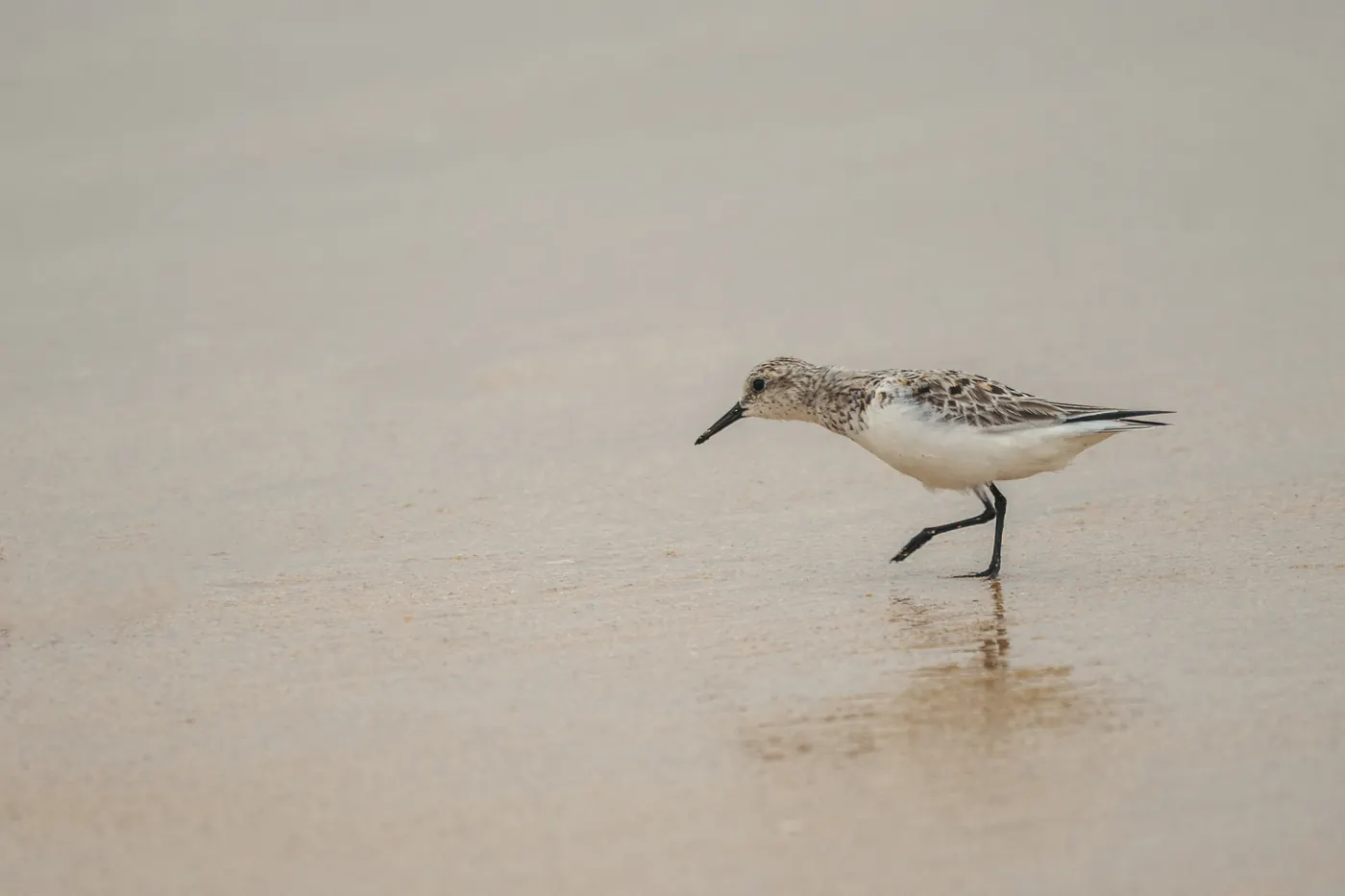
On 4 November 2026 DOC said a young pair of tara iti had been seen fishing in the Ruakākā estuary in Bream Bay and landing on a shell patch prepared for them near the river mouth. The last confirmed breeding at Ruakākā was in 1989. DOC named Patuharakeke Te Iwi Trust Board and Bream Bay Coastal Care among the partners in the work, with Auckland Zoo, where the young female was reared. DOC expects an estimated 14 to 15 breeding pairs this season, the highest number in many years, but says it is too early to know whether the Ruakākā pair will nest.
What are the rules on a nesting beach?
DOC asks every beach visitor to:
- Stay out of fenced and roped-off areas and use the marked walkways through them.
- Follow the signs. DOC wardens rope off and signpost nesting areas at key sites.
- Keep dogs on a lead, obey local dog rules, and keep dogs out of reserves.
- Keep vehicles and bikes off the beach. Do not drive or cycle on nesting beaches.
- Move away from a bird that swoops or acts injured. It is likely to have a nest or chicks nearby.
- Take rubbish, bait and fish scraps away, because they attract gulls and other predators.
DOC also lists drones and bonfires as disturbance to nesting tara iti, so we leave both out of any beach stop near a nesting site.
What should agents plan for?
- A briefing before the beach. Our guides tell the group about nesting birds before they step on the sand, so clients know why an area is fenced.
- Walkways, not short cuts. We plan beach walks along the marked access ways and the open sand, away from the dunes and the fenced areas.
- Photography from a distance. Clients who want photos of the birds use a long lens from outside the fences, never from inside them.
- Beach stops that may change. Nesting areas move from season to season, so we check local signs and DOC advice before each departure and adjust the stop if needed.
How Explera DMC New Zealand can help
We plan coastal days on the Matakana Coast, in Whangārei and Tutukākā and on the Coromandel. Our guides on these wildlife and nature experiences brief each group on the beach rules. See also our guide to seals, sea lions and penguins on the beach and our Tiaki Promise client briefing.
FAQ
What is the tara iti? The New Zealand fairy tern. DOC says it is the rarest breeding bird in New Zealand, with fewer than 40 adults in July 2025, and it nests on a few beaches in Northland and Auckland.
Where do tara iti nest? DOC lists four regular sites: Waipū, Mangawhai, Pākiri and Papakānui on the South Kaipara Head, with the Te Ārai and Poutawa river mouths used at times.
Can groups walk on beaches where birds are nesting? Yes, but DOC asks visitors to stay out of roped-off nesting areas, use the marked walkways and follow the signs.
Can visitors bring dogs to nesting beaches? DOC asks people to keep dogs off beaches and sandspits where birds nest, keep them on a lead, obey local dog rules and keep them out of reserves.
What should a visitor do if a bird acts injured? Move away slowly. DOC says a dotterel that drags a wing, or a bird that swoops, is likely to have a nest or chicks nearby.
Sources
- Rare tara iti could return to breed at Ruakākā after 37 years, Department of Conservation, 4 November 2026
- Tara iti/New Zealand fairy tern, Department of Conservation, checked 11 November 2026
- Northern New Zealand dotterel/tūturiwhatu, Department of Conservation, checked 11 November 2026
- New Zealand dotterel/tūturiwhatu, Department of Conservation, checked 11 November 2026
Talk to the trade desk
Explera DMC New Zealand trade desk — b2b@explera.co.nz, WhatsApp +66 93 656 8090, B2B portal b2b.expleradmc.com.


